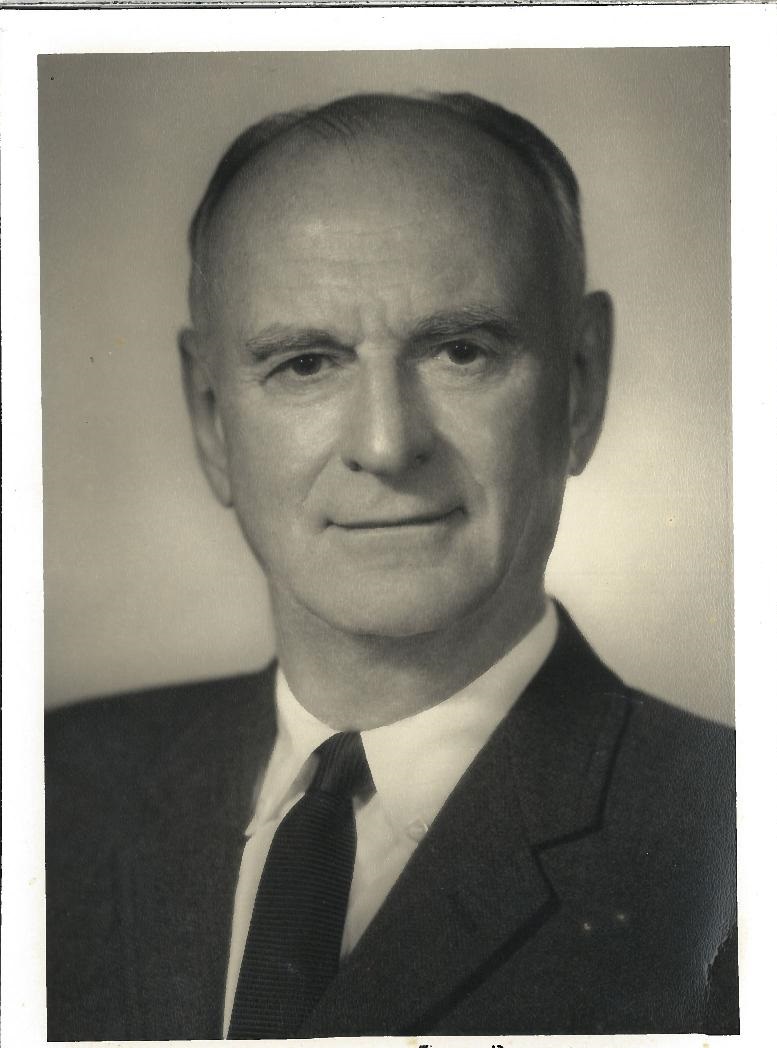
Here is the seventh installment of recollections from D. Bruce Lockerbie.
In April 1957, when Clyde S. Kilby, the Wheaton College chair of the English Department, told me that he had recommended me to his friend Frank E. Gaebelein at The Stony Brook School, I assumed that I would be a candidate to teach and coach, as I was doing that year at Wheaton College. While my initial conversation with FEG spoke of common literary interests, we soon focused on the sport of track. I learned that—although decades apart—we had shared the same coach at New York University, where he had run on the one mile relay team at the Penn Relays. He told me that, early in the School’s history, he challenged students to race him up Chapman Parkway, until his wife laid down the law. He also remarked on how his training as a runner had contributed to his disciplined exercise as an active mountaineer. I realized that I had met a man of remarkably diverse gifts.
But then I discovered that he also wanted to learn about my musical interests and experience. In contrast to his own, mine were woefully amateurish.
His father Arno C. Gaebelein was an accomplished pianist, and FEG had begun picking out tunes at the keyboard when still just a toddler at the Gaebelein home in Westchester County. Formal lessons soon followed. One of his teachers was the virtuoso Clarence Adler, himself a student of a protege of Johannes Brahms. I used to joke that, by apostolic succession, when you shook hands with FEG, you could extend backward in time to Brahms. FEG had enrolled at New York University, thinking of a career as a pianist, and as accompanist to the NYU choral group he provided piano solos during their concerts. His major in English there and as a graduate student at Harvard served only as a prudent backup in case music critics’ reviews weren’t favorable. An offer from the Stony Brook Assembly, in the spring of 1921, to take on the role of founding Headmaster of a boys’ school on Long Island called for a definitive decision—and thereafter he forfeited the dream of becoming a concert pianist.
But, of course, he never gave up music or playing the piano. He wrote and lectured extensively about the art of music and became renowned for promoting a biblical aesthetic to counter some of the theories of Francis Schaffer and Hans Rookmaaker. When I was preparing the posthumous collection of FEG’s essays The Christian, the Arts, and Truth, his daughter Gretchen Gaebelein Hull produced a trove of manuscripts about aesthetics, too many to include in that book. Over his 41 years as Headmaster, students became his Tuesday evening audience for mini recitals in the living room at Grosvenor House—followed by the reading of a detective story and Dorothy Medd Gaebelein’s desserts. Occasionally he would perform in public, for instance playing on a special radio broadcast on WQXR or a concerto with a local symphony orchestra.
FEG transferred his personal aesthetics to his educational philosophy. He had nothing but contempt for most other schools’ instruction in music history or “music de-preciation,” as he called it. He preferred exposing teenage boys to live performances by distinguished artists. In the decades before the State University of New York at Stony Brook built its campus and concert venues, Carson Auditorium had been one of the largest meeting spaces on Long Island and housed community events such as a high-level concert series—about which more below. The only fee charged by FEG was the free attendance of all students—required—at such events. In addition to external sponsorship, FEG used his New York City connections to arrange for musicians to give a “dry run” performance on campus, just before a Manhattan recital. Again, student attendance was mandatory.
He took a special interest in students with musical gifts, the most prominent of whom was a Cuban prodigy named Jorge Bolet, Class of 1934. FEG had welcomed and made arrangements for him to study both at Stony Brook and at the Curtis Institute in Philadelphia. As Bolet rose to international fame, he repaid FEG by rehearsing his impending New York City programs in Carson Auditorium. Thus the Brookers of that era adapted a Big Band slogan, “Swing and sway with Sammy Kaye” into “Sit and sweat with Jorge Bolet.”
My point is, Dr. Gaebelein was a bona fide musician, both artist and teacher. But on at least one musical occasion, he received a pair of lessons himself. The local community concert series mentioned above brought to Carson Auditorium a sound that in no way resembled anything ever heard at the meetings of the Stony Brook Assembly. A jazz quartet had been booked, headed by Teddy Wilson, the paramount jazz pianist of his day, with Arvell Shaw (bass), Buck Clayton (trumpet), and Jo Jones (drums). Frank Gaebelein had no clue as to who they were or how famous in their sphere of popular music. He stood with me at the rear of Carson Auditorium, at one point shaking his head and saying, “I’m like Rip Van Winkle waking up to a sound I’ve never heard before.” But the real highlight of the evening—especially to the boys—was the appearance of the “torch” singer Joya Sherrill in a bright red dress so tight she had to be lifted up the steps to the stage. Once there, she entertained with her hit song by Duke Ellington, “I’m Beginning to See the Light,” followed by “New York’s My Home,” from Gordon Jenkins’ “Manhattan Tower”—to which she inserted a line or two of her own: “Now Stony Brook’s a fine town, it’s got a fine school, and a Headmaster who’s real cool!”
The howls of glee from the Brookers in that audience drove FEG out the door of Carson. But having already invited the guest musicians to Grosvenor House for—undoubtedly—their first post-concert reception serving only a non-alcoholic punch, FEG proved to be a gracious host. By the time I arrived at his home, FEG was seated with Teddy Wilson on the piano bench, being instructed in how to riff on a hymn tune—very much as Bach did repeatedly in his cantatas.
By contrast, my musicianship was sorely limited. I was a Baptist preacher’s son with a total of six weeks of piano lessons before our family moved (the lessons were never resumed) and a boy soprano singing solos in church and school choirs, including the New York All-City High School Chorus, led by Peter J. Wilhousky. I’d also sung in a high school quartet that qualified for Paul Whiteman’s national radio talent show and another gospel quartet made up of four preachers’ kids who traveled as “The Four PK’s.” One Easter Sunday, when my father’s church organist/choir director suddenly quit five minutes before the morning service began, Dad drafted me to lead the choir. I continued in that role through four years at NYU, where I also sang in the University Chorale, and when I met FEG in 1957, I was leading a church choir in nearby Elmhurst, IL. Along the way, I’d learned to play an instrument called a vibraphone (four mallets, repertoire from Bach to boogie). This was the extent of my musical credentials, mostly gained by learning from the excellent conductors for whom I’d sung.
But upon receiving my appointment at Stony Brook—which included responsibility for conducting “The King’s Men,” I was stunned to learn that my predecessor was the noted baritone Frank Boggs from Baylor University, who had been invited to sing in command performance for Queen Elizabeth II on the evening before her coronation. Thank God, during the eight years I led, I had superb accompanists: Bob Merz, then teaching Latin, and Ruth Bell—wife of Robert Bell ’49, whose dramatic life-raft experience is told in our book In Peril on the Sea.
FEG was also helpful. At one of the evening meals during the week of early football and cross country practice, the Headmaster introduced the assembled athletes to the new members of the faculty—Doug Burton, Don Jones, Mal Tjornholm, Jerry Gill, and me. When he came to my name, he made two points: He mentioned that both he and I had been coached by the same man at NYU, and he referred to our mutual interest in music. Then he introduced me to offer an invitation to those present to join the choir. I remember closing my appeal with the words, “Real men sing.” It worked, because that 1957-58 version of “The King’s Men” included most of the School’s best athletes—Toby Walker, Al Malachuk, Dave Skillen, and Robin Lingle, among them.
Alumni from those years often mention two memories, also attributable to Frank Gaebelein the musician. Somehow he had contact with the organist who performed from the balcony in Grand Central Station for rush-hour passengers. He knew that choirs were added during Christmas and Easter seasons and urged me to offer the voices of “The King’s Men.” We were invited to sing in the huge vault of that iconic terminal. To practice filling that empty space with our voices, I took the choir outside Carson Auditorium to all-but-scream into the air. A few days after one of our several annual performances, I received a note written on the stationery of the Yale Club, just around the corner. It was an expression of appreciation and encouragement from Fenno Heath, then conductor of the Yale University Glee Club. He had been passing through the station, paused to listen, then wrote inviting any of the Stony Brook singers to join his choir.
The second memory is of our schoolwide singing at Commencement Exercises—another of FEG’s ideas. Some readers will recall that, winter through spring, weekly Wednesday chapel services were devoted to learning a few more measures of some choral selection, dividing the students and faculty into four-part harmony. Here is how Dr. Gaebelein—vocally tone deaf himself!—described us in his essay “Music in Christian Education.”
Each year the whole school of two hundred plus the faculty is organized for part singing. Through weekly rehearsals we learn some great music and sing it at public occasions... We have learned choruses from the Messiah, a “Gloria” from one of Mozart’s masses, some Bach, and this year we are working on a chorus from Haydn’s “Creation.” It is refreshing to hear adolescent boys humming or singing Mozart or Handel as they walk about the campus.
Then he added, “But one speaks of these things with humility, realizing how much should be done.”
Yes, indeed. But FEG would be blessed to know that today, under the guiding hand of Dustin Ramirez—latest successor to Robert Davis, and Peter Randall, and Don Fonseca, and others—music at a high level of excellence thrives at The Stony Brook School.

 stonybrookbears.org
I was privileged to sing with the King’s Men, and I remember well the joy of learning Mozart’s “Gloria” and the “Hallelujah Chorus” under DBL’s taut hands. My father was among the distinguished artists to give a Carson Auditorium concert during my years at The Brook. Sadly, serving Saturday evening detention that night, I missed the Teddy Wilson concert. Something “cultural” this mini-memoir doesn’t mention, but which I’ve thought about much in post-Brook years, and for which FEG can doubtless also be thanked: the school’s intriguingly stocked library. I suspect that from 1957-’61 it’d’ve been rare indeed to find another “conservative” Christian prep school in whose library you’d find books like Philip Wylie’s “Generation of Vipers,” Orwell’s “1984” and Huxley’s “Brave New World,” Salinger’s “Catcher in the Rye,” a generous, unexpurgated horde of ee cummings’ work, Kerouac’s “On the Road” and many other idea-troves from which most “funnymentalism” at the time might’ve wanted to “protect” young minds like mine, DBL let me know years later that a close watch was kept on students’ library use, yet no one in “authority” at The Brook ever questioned me about my multi-tasted book-maraudings, which most often exceeded in volume any course-required reading I did. So thanks, FEG and others (DBL and PC surely among them) also for the richness and breadth of the written word you made available, to eyes wanting to see the fullness of the world at the time.
LikeLike
Nick, thanks for your comment! I love hearing about recollections like yours. I’m very glad to hear about the mark that Stony Brook left on you. We have that common bond as an alum.
LikeLike